

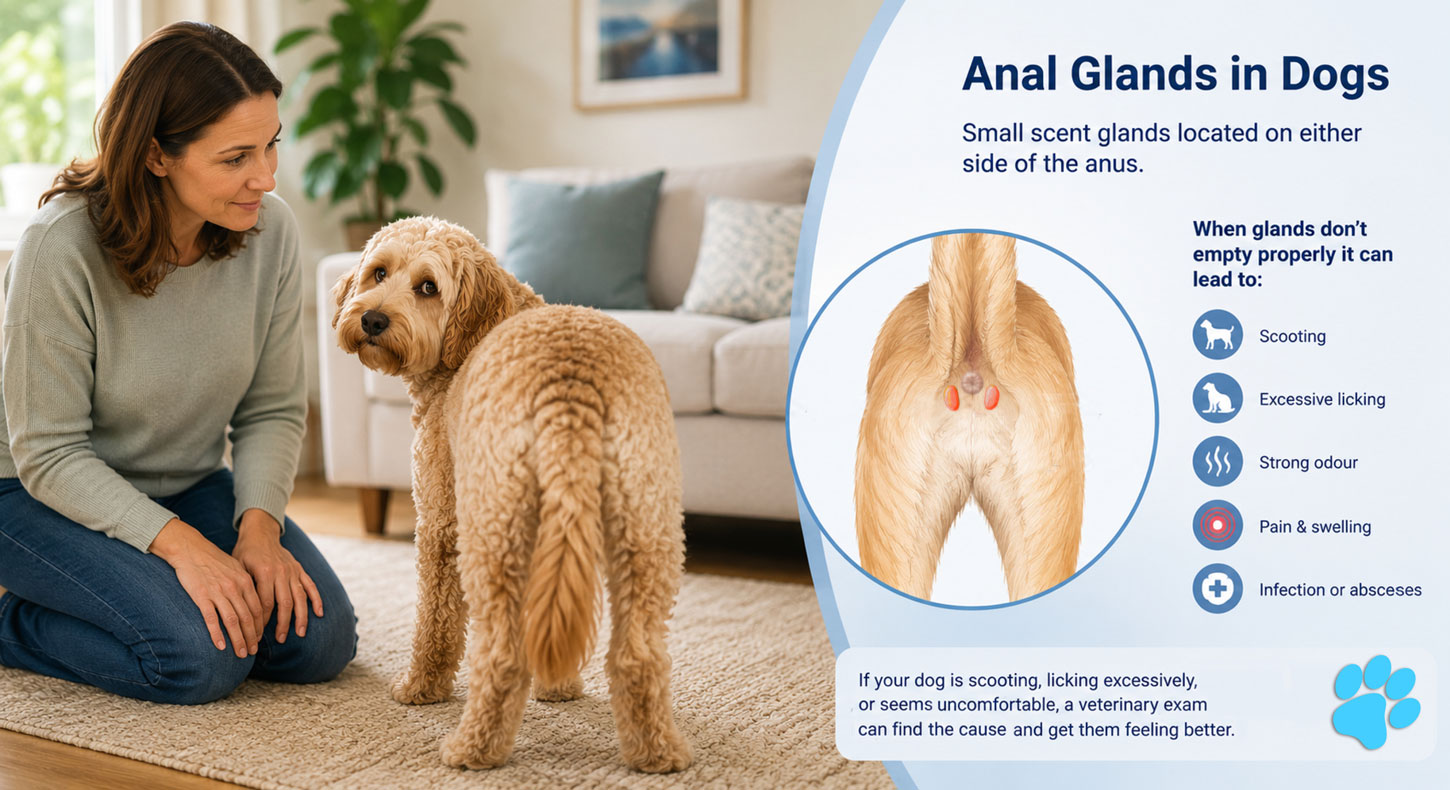
Why Is My Dog Scooting? Anal Gland Problems Explained
Few things catch a dog owner’s attention faster than seeing their dog dragging their bottom across the carpet, lawn, or floor. While it might look amusing at first, dog scooting is often a sign that something is irritating your pet’s rear end.
One of the most common reasons for dog scooting is a problem with the anal glands. However, scooting can also be caused by worms, allergies, skin conditions, or other health concerns.
If you’ve found yourself asking, “Why is my dog scooting?”, this guide explains the most common causes, how veterinarians diagnose the problem, and when it’s time to seek professional care.
What Is Dog Scooting?
Dog scooting is the behaviour of dragging the bottom along the ground while using the front legs to pull forward.
Although some dogs may do it occasionally, repeated scooting is usually a sign of irritation, discomfort, itching, or pain around the anus or surrounding skin.
Scooting itself is not a disease. Instead, it is a symptom that indicates something is bothering your dog.
Many owners immediately assume worms are responsible, but in reality, anal gland issues are one of the most frequent causes seen by veterinarians.
What Are Anal Glands and What Do They Do?
Anal glands, also known as anal sacs, are two small glands located on either side of your dog’s anus.
These glands produce a strong-smelling fluid that contains scent markers unique to each dog. In the wild, these secretions help dogs communicate information about themselves to other animals.
Normally, the glands empty naturally when a dog passes a firm bowel motion. The pressure created by the stool helps release a small amount of fluid.
In some dogs, however, the glands do not empty properly. When this happens, the fluid can build up, leading to irritation, inflammation, infection, and discomfort.
The Most Common Cause of Dog Scooting: Anal Gland Problems
Impacted Anal Glands
Impacted anal glands occur when the gland contents become thick or fail to empty properly.
As the material builds up, the glands become enlarged and uncomfortable. Dogs may respond by scooting, licking the area excessively, or appearing restless.
Signs of impacted anal glands may include:
- Scooting along the floor
- Excessive licking of the rear end
- Chasing or chewing the tail
- A strong fishy odour
- Discomfort when sitting
Infected Anal Glands
If impacted glands are left untreated, bacteria can multiply within the gland and cause an infection.
Infected anal glands can become painful and inflamed.
Signs may include:
- Swelling beside the anus
- Redness of the surrounding skin
- Pain when touched
- Discharge from the gland
- Reluctance to sit down
Anal Gland Abscesses
In more severe cases, an infected gland can develop into an abscess.
An abscess occurs when infection creates a pocket of pus inside the gland. Eventually, the abscess may rupture through the skin beside the anus, creating a painful wound.
Signs of an anal gland abscess may include:
- Severe scooting
- Visible swelling
- Blood or pus near the anus
- Sudden pain
- Lethargy
- Reduced appetite
Anal gland abscesses require prompt veterinary treatment to relieve pain and prevent further complications.
Other Reasons Dogs Scoot
Although anal gland problems are common, they are not the only reason dogs drag their bottoms across the ground.
Intestinal Worms
Certain intestinal parasites can cause irritation around the anus.
Tapeworms are particularly associated with scooting because small segments may migrate from the anus and create itching.
However, not every scooting dog has worms, and many dogs with worms show no scooting behaviour at all.
Allergies
Allergies are another common cause of scooting.
Dogs suffering from environmental allergies or food allergies often develop inflammation around the skin of the rear end.
You may also notice:
- Itchy ears
- Paw licking
- Red skin
- Recurrent skin infections
When allergy-related inflammation affects the area around the anus, scooting can develop.
Matted Fur and Hygiene Issues
Long-haired breeds can sometimes develop mats or accumulations of faecal material around the rear end.
This can cause irritation and discomfort, leading to scooting behaviour.
Regular grooming is particularly important for breeds with longer coats.
Skin Infections and Dermatitis
Bacterial infections, yeast infections, and dermatitis can all affect the skin around the anus.
These conditions often cause intense itching, prompting dogs to drag their bottoms across the ground in an attempt to relieve the irritation.
Foreign Material
Grass seeds, plant material, dirt, or other debris can occasionally become trapped around the anus or under the tail.
Even a small amount of foreign material can cause significant irritation.
Are Some Dog Breeds More Prone to Anal Gland Problems?
Yes. While any dog can develop anal gland issues, certain breeds appear to be more susceptible than others.
Smaller breeds are overrepresented among dogs that require treatment for impacted or infected anal glands. This is thought to be due to a combination of anatomy, body shape, stool consistency, and a higher incidence of allergies and skin conditions.
Breeds that may be more prone to anal gland problems include:
- Cavalier King Charles Spaniels
- Cocker Spaniels
- Shih Tzus
- Toy and Miniature Poodles
- Bichon Frises
- Maltese Terriers
- French Bulldogs
- Chihuahuas
- Pugs
Many of these breeds are also more likely to suffer from allergic skin disease, which can contribute to inflammation around the anal glands and increase the risk of recurrent problems.
Can Larger Dogs Get Anal Gland Problems?
Absolutely.
Although anal gland issues are often associated with smaller breeds, larger dogs can also be affected. Labrador Retrievers, Golden Retrievers, German Shepherds, and mixed-breed dogs may all develop impacted or infected glands.
In larger dogs, obesity can sometimes play a role. Carrying excess weight may affect posture, mobility, and the natural emptying of the glands during bowel movements.
Are Allergic Dogs More at Risk?
Dogs with allergies are among the most common patients we see with recurring anal gland issues.
Environmental allergies, food allergies, and chronic skin inflammation can all contribute to irritation around the anal glands. In some dogs, treating the underlying allergy significantly reduces the frequency of anal gland problems.
If your dog experiences recurrent scooting, ear infections, paw licking, or itchy skin alongside anal gland issues, your veterinarian may recommend investigating allergies as part of a long-term management plan.
Does Age Matter?
Anal gland problems can occur at any age, but they are most commonly seen in adult and middle-aged dogs.
Puppies can occasionally develop anal gland issues, although parasites, dietary indiscretion, or digestive upset are often more common causes of scooting in younger dogs.
Senior dogs may also experience recurrent gland problems, particularly if they have reduced mobility, obesity, chronic skin disease, or other underlying health conditions.
Signs Your Dog Needs Veterinary Attention
Occasional scooting may not always indicate a serious problem. However, frequent or persistent scooting should never be ignored.
You should arrange a veterinary examination if your dog is experiencing:
- Repeated scooting
- Excessive licking of the rear end
- A strong fishy odour
- Swelling around the anus
- Blood or discharge
- Pain when sitting
- Difficulty passing stools
- Changes in appetite or behaviour
It is important not to assume the cause. Many different conditions can produce similar symptoms, and early diagnosis often leads to simpler treatment and better outcomes.
How Vets Diagnose Anal Gland Problems
When your dog visits Normanhurst Vet Practice, we begin with a thorough examination.
This may include:
- Reviewing your dog’s medical history
- Discussing recent symptoms
- Examining the skin around the anus
- Checking for parasites
- Assessing the anal glands
In many cases, a rectal examination allows us to determine whether the glands are impacted, infected, or otherwise abnormal.
Depending on the findings, we may also investigate underlying issues such as allergies, gastrointestinal conditions, or skin disease that could be contributing to the problem.
Treatment for Anal Gland Problems in Dogs
Treatment depends on the underlying cause of your dog’s scooting.
Anal Gland Expression
For impacted glands, manual expression may provide immediate relief.
This procedure removes the accumulated material and reduces pressure within the glands.
Not all dogs require routine gland expression, and unnecessary expression may sometimes create irritation. For this reason, it is best performed when clinically indicated.
Treating Infection
Infected glands may require:
- Antibiotics
- Anti-inflammatory medications
- Pain relief
- Follow-up monitoring
More advanced infections or abscesses may require additional treatment.
Managing Allergies
When allergies contribute to scooting, successful management often involves addressing the underlying allergic condition.
Depending on the cause, this may include:
- Dietary changes
- Allergy testing
- Prescription medications
- Long-term allergy management plans
Weight Management and Fibre
Maintaining a healthy body weight plays an important role in anal gland health.
Overweight dogs may be more prone to anal gland issues, while firmer stools often help glands empty naturally during bowel movements.
A balanced diet and healthy body condition can therefore form an important part of long-term management. If your pet is carrying extra weight, our team can help develop a safe weight management plan.
Can Anal Gland Problems Be Prevented?
Not every case can be prevented, but there are several steps that may reduce the risk of recurrent issues.
These include:
- Maintaining a healthy weight
- Feeding a balanced, high-quality diet
- Managing allergies promptly
- Keeping the rear end clean and well groomed
- Scheduling regular veterinary health checks
- Monitoring changes in bowel habits
Some dogs appear genetically predisposed to anal gland problems and may require ongoing management throughout their lives.
Frequently Asked Questions
Why is my dog scooting across the carpet?
Scooting is usually caused by irritation around the rear end. Common causes include anal gland problems, allergies, worms, skin infections, or trapped debris.
Does dog scooting always mean worms?
No. While worms can cause irritation, anal gland issues are one of the most common causes of scooting seen by veterinarians.
How do I know if my dog’s anal glands are full?
Signs may include scooting, excessive licking of the rear end, a strong fishy smell, swelling beside the anus, or discomfort when sitting.
Can anal gland problems go away on their own?
Mild cases occasionally improve, but impacted or infected glands often worsen without treatment. Veterinary assessment is recommended if symptoms persist.
Should I express my dog’s anal glands at home?
Anal gland expression should only be performed by someone who has been properly trained. Incorrect technique can cause pain, injury, or further inflammation. If you suspect a problem, it’s safest to have your dog examined by a veterinarian.
Helping Your Dog Stay Comfortable and Healthy
Dog scooting is a common symptom, but it should never be ignored if it occurs regularly. While anal gland problems are one of the most frequent causes, other issues such as worms, allergies, skin conditions, and infections can produce similar signs.
The good news is that most causes of scooting can be successfully treated once the underlying problem is identified.
If your dog has started dragging their bottom, licking excessively, or showing signs of discomfort, the experienced team at Normanhurst Vet Practice can help determine the cause and provide appropriate treatment.
Contact our friendly team on (02) 9489 6000 to book an appointment and help keep your dog comfortable, healthy, and happy.