

August is Pet Dental Health Month… But Every Month Matters
August is recognised across Australia as Pet Dental Health Month, a time to shine a light on the importance of oral care for our cats and dogs. While this awareness campaign is a fantastic reminder to check your pet’s teeth, the truth is that dental health should be a year-round priority. Left unchecked, dental disease can lead to pain, infection, and even impact your pet’s overall health.
This guide explores why dental care matters, how to spot problems early, and what you can do to keep those tails wagging and purrs going strong.
Understanding Pet Dental Disease
Dental disease is one of the most common health issues seen in veterinary practices, affecting an estimated 80% of dogs and 70% of cats over three years old (Australian Veterinary Association). It usually begins with plaque build-up, which hardens into tartar, leading to inflammation of the gums (gingivitis) and progressing to periodontal disease if untreated.
Over time, bacteria from the mouth can enter the bloodstream, potentially affecting organs like the heart, liver, and kidneys. The early stages can be subtle, making regular vet checks essential for catching issues before they become painful and costly.
TIP: Early dental disease is easy to miss
Plaque build-up and early gum inflammation often occur below the gumline, where you can’t see it. Regular vet checks and dental exams are the most reliable way to detect problems before they become painful.
Signs Your Pet May Have Dental Disease
Recognising the early warning signs of dental problems is the first step to prevention. Symptoms can include:
Bad breath(halitosis)
That unpleasant smell isn’t just about “dog breath” or “cat breath”, it’s often a sign that bacteria are at work in the mouth. These bacteria release foul-smelling sulphur compounds, which get worse as tartar builds up. Owners may notice this smell long before other symptoms become visible, making it one of the earliest indicators of dental issues.
Red, swollen, or bleeding gums
Gingivitis (inflammation of the gums) often appears before major tooth damage. In the early stages, gums might look just slightly red, but as inflammation progresses, they can swell and bleed, especially during eating or chewing. Left untreated, gingivitis can develop into periodontitis, which affects the structures that hold teeth in place.
Brown or yellow tartar on teeth
A yellow or brown tinge is usually plaque that’s hardened into tartar. This layer provides a home for bacteria to thrive, eventually pushing under the gumline. Once this happens, the damage can progress quickly, even if the outer tooth still looks relatively healthy from a distance.
Drooling or pawing at the mouth
If your pet is salivating more than usual, especially if the drool is tinged with blood, or frequently rubbing their face or mouth, it can indicate pain or discomfort from dental disease. This might be due to inflamed gums, broken teeth, or oral ulcers. While some pets drool when relaxed or excited, excessive or sudden changes in drooling patterns are worth a veterinary check.
Difficulty eating or chewing
Pets with sore mouths may chew more slowly, drop food, or show a preference for soft foods. Some might even stop eating altogether. In cats, you may notice pawing at the mouth or sudden avoidance of certain textures, while dogs may become reluctant to chew toys they once enjoyed.
Reduced interest in hard food or toys
Dental pain can make it uncomfortable or even impossible for your pet to chew crunchy kibble, biscuits, or chew toys they once enjoyed. They may opt for softer food, swallow kibble whole, or simply refuse treats that require biting. This change in eating behaviour is a clear signal that something may be wrong in the mouth and should be investigated quickly to prevent further deterioration.
Cats may also show subtle behavioural changes such as irritability or reduced grooming. In many cases, pets will hide discomfort until the problem is advanced, which is why proactive dental checks are so important.
How Dental Disease Progresses
Stage 1 – Gingivitis
This is when plaque bacteria first irritate the gums. At this stage, the damage is reversible with professional cleaning and improved home care. Regular brushing or dental diets can make a significant difference if started early.
Stage 2 – Early Periodontitis
Plaque hardens into tartar both above and below the gumline. Gums start to recede, creating pockets where more bacteria collect. Mild bone loss may begin at this stage. While treatment can stop or slow progression, it cannot replace lost bone or tissue.
Stage 3 – Moderate Periodontitis
The bone supporting the tooth is being destroyed, causing instability. Pets may experience noticeable pain, and teeth may loosen. Infection can spread through the bloodstream, potentially affecting the heart, liver, and kidneys.
Stage 4 – Advanced Periodontitis
Severe bone loss and infection are present, often requiring tooth extraction to prevent ongoing pain and further health issues. Unfortunately, by this stage, the damage is irreversible, and the priority becomes preventing future disease in remaining teeth.
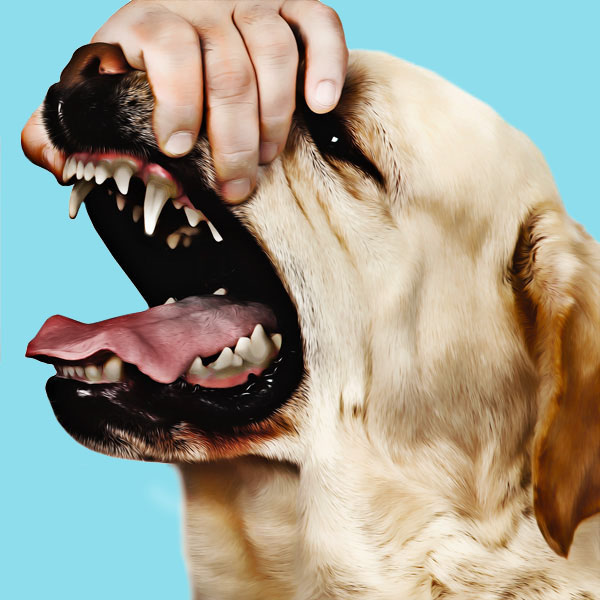
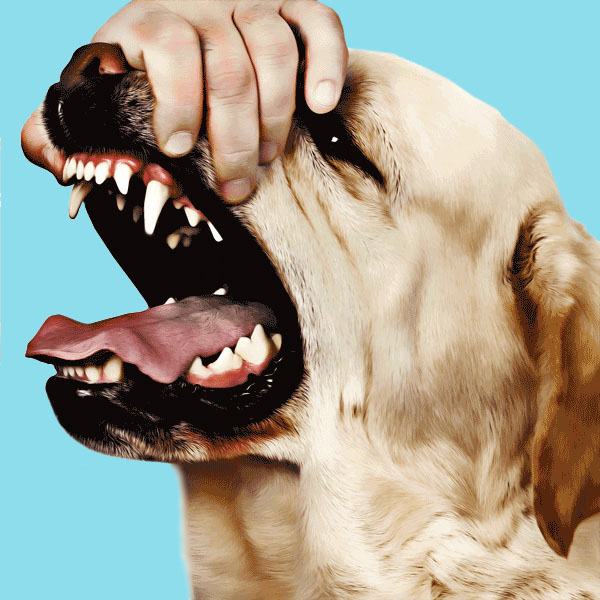
DOG’S TEETH SHOWING PLAQUE BUILD-UP
DOG’S TEETH WITHOUT PLAQUE BUILD-UP
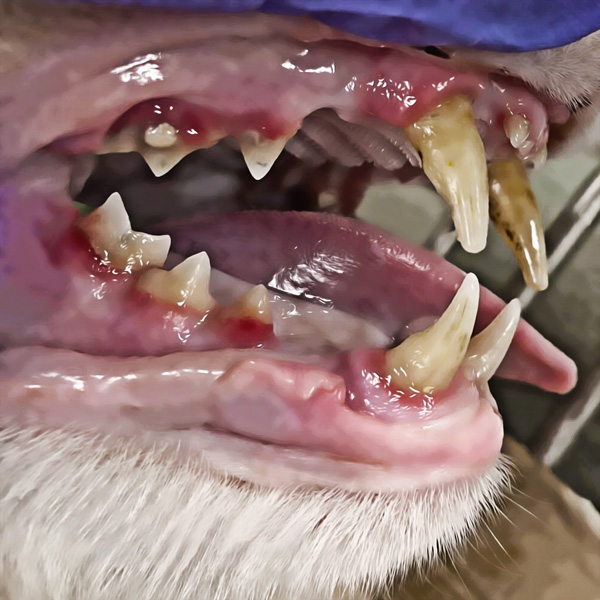
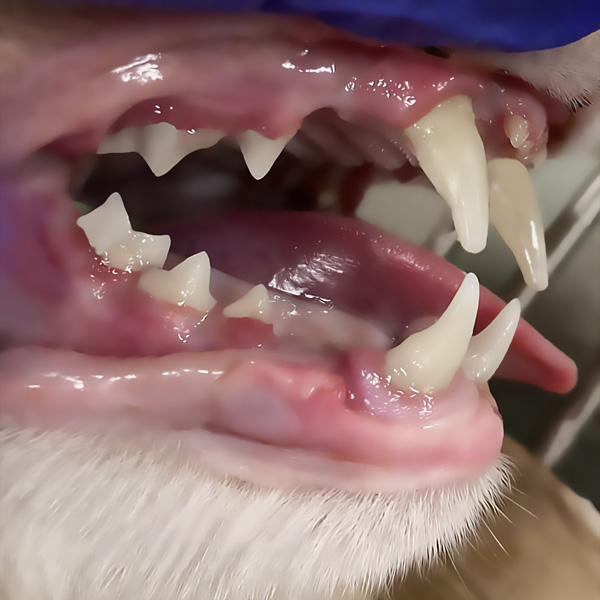
FELINE PLAQUE BUILD-UP
NO PLAQUE BUILD-UP
Book Your Pet’s Dental Check
Dental health problems are best treated early. Book your pet’s dental check with our team today and keep their smile healthy for years to come. Give us a call to make an appointment.
Prevention is Better Than Cure
Professional veterinary dental care is essential, but what you do at home plays a huge role in keeping your pet’s mouth healthy. Brushing your pet’s teeth with a pet-safe toothbrush and toothpaste is a good option, but there are other supportive options:
Daily or regular tooth brushing
This is still the gold standard for dental care. A pet-safe toothbrush and toothpaste (never human toothpaste) can dramatically reduce plaque build-up. Start slowly, allowing your pet to get used to the sensation, and reward them afterwards.
Veterinary-approved dental diets and chews
Products like Hill’s Science Diet Oral Care or Hill’s Prescription Diet t/d (therapeutic diet) are designed with larger kibble sizes and specific textures that help scrub teeth as your pet chews. Vet-approved dental chews can also reduce plaque and tartar, but avoid bones or hard antlers that may cause tooth fractures. There are also some water additives designed to aid in oral health. Speak to our team at Normanhurst Vets to find out what we recommend for your dog or cat.
Chew toys
Choose toys that are firm but not rock-hard; rubber toys, certain rope toys, and specifically designed dental toys are ideal. The key is to avoid anything harder than your pet’s teeth.
Regular vet checks
Even with perfect home care, plaque and tartar will eventually build up. Annual dental checks allow your vet to catch problems early and recommend professional cleaning if needed.
Dry vs Wet Food – Which is Better for Dental Health?
Both dry (kibble) and wet food can be part of a healthy, balanced diet, but when it comes to dental health, there are some differences to consider:
- Dry food: The crunch can help reduce plaque build-up compared to soft foods, but only if your pet fully utilises the crunchy nature of the food. But, let’s face it, if your dog is anything like ours, that meal is gone before you can say “chew 10 times before swallowing”! Dry food is great, though it’s not a substitute for brushing or veterinary cleaning.
- Wet food: Contains more moisture, which supports hydration (especially important for cats), but tends to stick to teeth more easily.
TIP: Not all dry food supports dental health
Standard kibble may offer some mild abrasion, but only specially formulated dental diets are designed to actively reduce plaque and tartar. Ask us which options are clinically proven to support oral health.
If you feed primarily wet food, make sure your pet also has access to dry food, dental chews, or other oral health aids. Regardless of food type, fresh, clean water should always be available.
The Role of AVA and PFIAA Standards in Pet Food Quality
When selecting pet food, it’s worth looking for products that meet the standards set by the Australian Veterinary Association (AVA) and the Pet Food Industry Association of Australia (PFIAA). These bodies provide guidance to ensure pet foods are nutritionally balanced and safe.
Not all pet foods on the market meet these standards especially some imported or generic supermarket brands, so checking for certification can help you make an informed choice.
Why a “Complete Diet” Matters
Many supermarket pet foods are labelled as “snacks” or “supplements” rather than complete meals. If the packaging doesn’t say “complete and balanced” or “complete diet,” your pet may not be getting all the nutrients they need for long-term health.
Feeding an incomplete diet over time can lead to nutrient deficiencies, which may affect bone health, immune function, and even dental strength.
TIP: Not sure if your pet’s food is truly complete? Why not read our DIET article, which takes a closer look at what our pets are eating and what constitutes a complete diet for them?
Veterinary Dental Cleaning is The Gold Standard
Even with the best home care, some plaque and tartar will still accumulate over time. Professional veterinary dental cleaning is performed under general anaesthesia, allowing your vet to:
- Thoroughly clean teeth above and below the gumline
- Remove tartar and polish teeth to slow future build-up
- Take dental X-rays to check for hidden problems
This is the only way to fully assess and treat dental disease, much like your own visits to the dentist.
Concerns and Questions We Hear from Clients
“Does dry food clean teeth?”
While some specially formulated dental diets can help reduce tartar, standard dry food alone does not prevent dental disease. The shape, texture, and composition of the kibble all influence its ability to clean teeth, and most commercially available dry food is not designed to provide the abrasive action needed. Regular toothbrushing and professional veterinary cleaning remain the gold standard for keeping your pet’s teeth healthy. Think of it like eating crackers, they won’t replace brushing your own teeth.
“My pet’s breath is just a bit smelly”
Bad breath isn’t normal for dogs or cats; it’s usually a sign of underlying dental or gum disease. Odour can be caused by bacteria in the mouth, infection under the gums, or even problems elsewhere in the body that are linked to oral health. Ignoring bad breath means the disease can progress silently until it causes pain, tooth loss, or more serious health problems.
“Anaesthetic is too risky”
Modern veterinary dentistry uses advanced anaesthetic protocols, monitoring, and equipment to make the process as safe as possible, even for older pets. The risks of leaving dental disease untreated often outweigh the controlled risk of anaesthesia. By performing pre-anaesthetic blood work and tailoring the anaesthesia to your pet’s health status, veterinarians can greatly minimise risk and keep your pet comfortable during the procedure.
Take the First Step This Dental Month
Good dental care means more than fresh breath, it’s about protecting your pet from pain, infection, and serious illness. Whether your furry friend is a playful pup, a senior cat, or somewhere in between, oral health is key to their wellbeing.
Give us a call to book a consultation or inquire about our mobile vet visits for pets that struggle to travel.