
Is My Pet a Healthy Weight? A Guide for Dogs and Cats
Spring has arrived in Sydney. The days are getting longer, walks are becoming more appealing and, for many of us, thoughts inevitably turn towards becoming a little more active after winter.
But forget the idea of a “summer bod” for your dog or cat. When we talk about a healthy weight for pets, appearance isn’t the goal. What matters is maintaining a body condition that supports good health, comfortable movement, appropriate muscle mass and quality of life.
That sounds simple enough, until you ask an apparently straightforward question: What should my pet actually weigh?
The answer isn’t always a number.
Two healthy dogs of the same breed, age and sex may not have exactly the same ideal weight. A crossbred dog’s healthy weight can be even harder to estimate from breed averages. Cats vary in frame and body composition too. Age, muscle mass, activity, desexing, health and individual energy requirements can all influence what is appropriate.
That’s why, at Normanhurst Vet Practice, assessing healthy weight involves looking at the animal in front of us, rather than simply comparing the number on the scales with a chart.
And there’s quite a lot you can learn to look for at home too.
What Is a Healthy Weight for a Dog or Cat?
Weighing your pet is useful. In fact, regularly recording their weight can help identify gradual changes that might otherwise be difficult to notice.
But weight and healthy body condition are not quite the same thing.
A kilogram tells us how heavy an animal is. It doesn’t tell us how much of that weight is muscle, fat or other body tissue, or whether that composition is appropriate for the individual animal.
This is particularly important when comparing different breeds.
A naturally lean, athletic dog will have a very different body shape from a more heavily built breed at a healthy weight. Even within the same breed, there can be considerable variation in frame, muscle mass and individual body composition.
Rather than concentrating on a single “ideal weight”, veterinarians therefore consider several factors together. These can include:
- current body weight and previous weight history
- body condition
- muscle condition
- breed and body structure
- age and life stage
- activity levels
- whether the pet has been desexed
- diet and total daily food intake
- existing health conditions
- unexplained changes in appetite, weight or muscle mass
This helps explain why the answer to “What should my Labrador weigh?” isn’t necessarily found by looking up an average Labrador weight online.
The more useful question is: What is a healthy weight and body condition for this Labrador?
How Can I Tell if My Dog or Cat Is a Healthy Weight?
You’ve probably seen a Body Condition Score chart. There’s a good chance you’ve looked at one while sitting in a veterinary consulting room waiting for your pet’s appointment.
Usually, it shows a series of dogs or cats viewed from above and from the side, gradually progressing from very thin through to ideal weight and then overweight or obese.
Useful? Yes.
The whole story? Not quite.
A Body Condition Score (BCS) is a structured veterinary assessment of body fat. Common systems use either a five-point or nine-point scale. On the widely used nine-point system, an ideal BCS is generally around 4 to 5 out of 9 for dogs and 5 out of 9 for cats.
But assigning that score involves more than deciding which silhouette your pet most closely resembles.
A proper assessment uses both observation and touch.
Start with the ribs
Run your hands gently over your pet’s ribcage.
In an animal with ideal body condition, the ribs should generally be easy to feel beneath a slight covering of fat. You shouldn’t need to press firmly to find them.
If the ribs are extremely prominent with little or no tissue covering them, the animal may be underweight. At the other end of the scale, if considerable pressure is required before you can identify individual ribs, excess body fat may be present.
Coat length makes touch particularly important. A long-haired cat or fluffy dog can look considerably larger than the body underneath all that fur.
Look from above
Viewed from above, a pet at an appropriate body condition should usually have some definition of the waist behind the ribs.
Again, breed and body structure matter. We’re not looking for every animal to have exactly the same hourglass shape.
We’re looking at whether the shape is appropriate for that animal.
Look from the side
The abdomen provides another clue.
Dogs and cats at a healthy body condition will generally show an abdominal tuck, where the underside rises from the ribcage towards the hind legs.
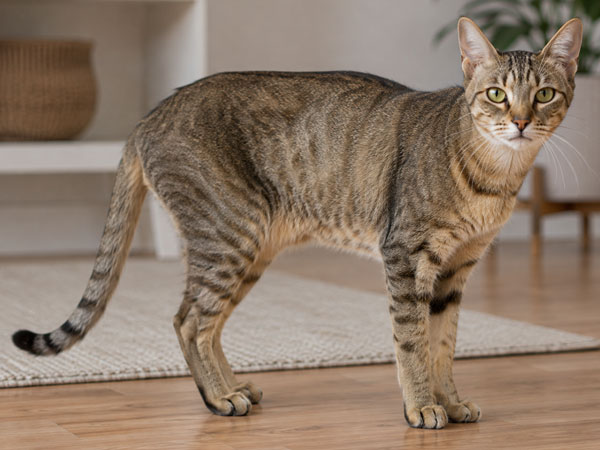
An abdomen that hangs down isn’t automatically evidence of obesity. Age, breed, pregnancy, previous weight loss and medical conditions can all affect appearance, and cats have a normal structure called the primordial pouch, which shouldn’t simply be mistaken for excess weight.
This is one reason Body Condition Score shouldn’t be reduced to judging an animal’s silhouette.
Feel, don’t just look
Veterinary assessment also considers fat deposits around areas such as the ribs, spine, tail base and abdomen.
This matters because body fat isn’t always distributed evenly.
A pet can therefore look reasonably proportioned from one angle while palpation tells us something different.
The reverse can happen too. Some breeds naturally have a body shape that may appear unusually lean or heavily built when compared with the generic dog pictured on a BCS chart.
The chart gives us a framework. The animal provides the answer.
Body Condition Score Doesn’t Tell Us Everything
There’s another assessment that receives far less attention from pet owners, but becomes increasingly important as animals age: Muscle Condition Score (MCS).
BCS primarily assesses body fat.
MCS assesses muscle mass.
And those two things don’t necessarily move together.
An animal can carry excess body fat while simultaneously losing muscle. WSAVA nutritional assessment guidelines specifically recognise that an overweight animal can have significant muscle loss that may be difficult to detect without careful examination.
That changes how we should think about healthy weight.
Imagine an older dog whose weight has barely changed over the past year.
On the scales, everything might appear stable.
But if that dog has gradually lost muscle over the back, shoulders or hindquarters while gaining a similar amount of body fat, the number displayed on the scales could remain almost identical.
Stable weight doesn’t necessarily mean stable body condition.
Veterinarians assess muscle condition visually and by feeling areas including the spine, shoulder blades, skull and pelvic bones. Age-related loss of lean body mass is particularly important to recognise in senior pets.
This is also why weight management shouldn’t simply mean making the number on the scales go down.
For an overweight pet, we ideally want excess body fat to decrease while preserving healthy lean muscle.
For an older or underweight animal, maintaining or rebuilding muscle may be a more important nutritional goal than reaching a predetermined number on a weight chart.
Why Your Pet’s Healthy Weight Is Individual
Once we stop treating body weight as a single number, some of the apparent contradictions surrounding pet nutrition begin to make more sense.
One dog may need fewer calories because activity has decreased.
Another dog of exactly the same weight may require considerably more energy because of activity, body composition or life stage.
One senior pet may need controlled calories to prevent excess weight placing additional strain on ageing joints.
Another senior animal may be losing lean muscle and body weight and require a very different nutritional approach.
Cats present their own considerations. Research reviewed in veterinary senior-care guidelines indicates that energy requirements can change again in later life, while some older cats experience reduced ability to digest nutrients. As a result, assuming that every older cat simply needs “less food” can be inappropriate.
Even commercial foods labelled senior don’t provide a universal answer. Unlike growth diets, there isn’t one specific set of nutritional requirements that defines a food as appropriate for every senior dog or cat.
The important principle is therefore surprisingly straightforward:
Feed the pet in front of you, not simply their age, breed or the number on the scales.
That means regularly assessing body weight, body fat, muscle condition, diet, activity and health together, and adjusting the feeding plan when those circumstances change.
Does Breed Affect a Pet’s Ideal Weight?
Breed can tell us something about likely size, body structure and susceptibility to certain health conditions. It can also give veterinarians useful clues about an animal’s tendency to gain weight.
But breed isn’t a nutritional destiny.
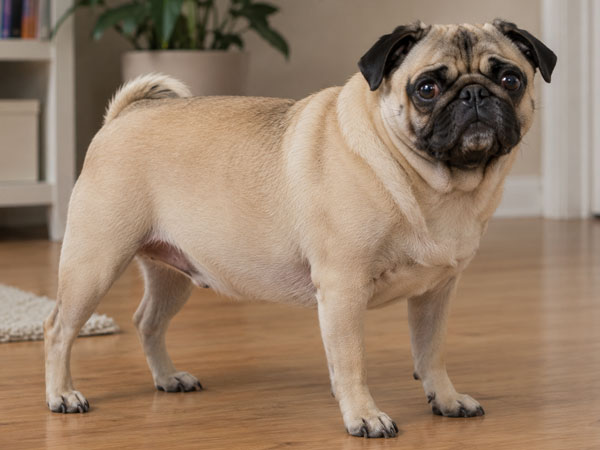
Research involving dogs attending veterinary practices has found meaningful differences in overweight risk between breeds. Pugs, Beagles, Golden Retrievers and English Springer Spaniels, for example, have been identified among breeds with increased odds of being overweight in large population studies.
There are also fascinating differences within breeds.
Labrador Retrievers have been particularly well studied. Researchers have identified a genetic variant affecting the POMC gene in some Labradors that is associated with increased food motivation, body weight and adiposity.
In other words, when some Labrador owners insist their dog appears to be permanently hungry, there may be rather more going on than canine optimism at the sound of the refrigerator door.
However, genetics is only part of the picture.
Activity, diet, environment, age, health, individual metabolism and how much food is actually consumed all contribute to body condition.
What About Poodle Crosses and Other Crossbred Dogs?
This becomes particularly interesting with popular crosses such as Labradoodles, Spoodles and Cavoodles.
These names are useful ways of describing dogs with particular ancestry, but they don’t mean every individual will inherit an identical combination of physical or metabolic characteristics from the parent breeds.
A Labrador crossed with a Poodle, for example, doesn’t necessarily become a metabolic halfway point between a Labrador and a Poodle.
Likewise, a Spaniel-Poodle cross may inherit different combinations of body structure, appetite, activity and other characteristics from either side of its ancestry.
We therefore can’t look at a Labradoodle or Spoodle and reliably predict its future weight simply from the breeds in the mix.
What the ancestry can do is give us useful background information.
If one of the contributing breeds has a recognised predisposition to excess weight, that’s something worth knowing and monitoring. It doesn’t mean the individual dog will become overweight.
And the reverse is equally important: having ancestry associated with a naturally leaner body type doesn’t provide protection against excess weight if energy intake regularly exceeds what that individual dog uses.
Even two dogs of the same recognised breed, living in the same household and receiving similar care, can have noticeably different builds, appetites and energy requirements.
Breed gives us clues.
The individual dog tells us considerably more.
Does Desexing Make Dogs and Cats Gain Weight?
This question has traditionally attracted a fairly firm answer:
“No. Desexing doesn’t make pets fat.”
We can be a little more nuanced than that today.
Research indicates that desexing can be associated with an increased risk of becoming overweight, and maintenance energy requirements can be lower in neutered dogs than in sexually intact dogs.
That does not mean desexing inevitably causes obesity.
Nor does it mean that avoiding desexing is a sensible weight-management strategy.
What it means is that an animal’s energy balance may change following desexing, so the amount of food that maintained a healthy weight beforehand may not necessarily remain appropriate afterwards.
Several things may contribute.
Energy requirements can change. Appetite and food-seeking behaviour may change in some animals. Activity and lifestyle can change as pets mature. And because many dogs and cats are desexed while they are still young, the procedure can coincide with another important change: the transition from a growing youngster to an adult animal.
That makes cause and effect difficult for an owner to see.
A young pet may have been eating enough to support growth, development and energetic puppy or kitten behaviour. Months later, growth has slowed, activity may have changed and the same feeding routine may now provide more energy than the animal requires.
Does the Age of Desexing Make a Difference?
This is an area where simple answers should be treated cautiously.
Research continues into the relationship between age at desexing and a range of health outcomes, and decisions about timing can involve breed, sex, expected adult size, behaviour and individual health considerations.
When we look specifically at weight, however, current evidence doesn’t justify saying that early desexing automatically causes a slower metabolism or inevitably produces an overweight adult.
Recent large-scale research has found that the relationship between desexing, age at desexing and subsequent overweight risk varies between groups of dogs.
So rather than assuming a particular age of desexing will determine your pet’s future waistline, there’s a more practical approach:
Monitor what happens to the individual animal afterwards.
Regular weighing, checking Body Condition Score, monitoring muscle condition and adjusting food intake when necessary can identify a change long before a pet becomes significantly overweight.
Desexing may change part of the equation.
It doesn’t determine the result.
Do Pets Need Fewer Calories as They Get Older?
Sometimes.
And that single word is important.
It is tempting to assume that ageing automatically means slowing down, which means fewer calories, which means feeding less.
For some pets, that’s perfectly reasonable.
Maintenance energy requirements generally decrease across a dog’s lifetime. An older dog that becomes less active while continuing to eat the same amount may gradually gain body fat.
But ageing can produce the opposite nutritional challenge too.
Senior animals can lose lean muscle mass, and very old animals may begin losing body weight. Illness, dental disease, reduced appetite, poorer digestion and other age-related changes can also alter nutritional requirements.
Cats make the “older means fewer calories” rule particularly unreliable.
Energy requirements commonly decline as cats approach middle age, but veterinary senior-care guidelines indicate that they may increase again after approximately ten years of age. Some senior cats also become less efficient at digesting protein and fat.
That means an older cat who is becoming thin may require more energy, not less.
Muscle Matters More as Pets Age
This brings us back to the difference between Body Condition Score and Muscle Condition Score.
Ageing animals can lose lean muscle while retaining, or even gaining, body fat.
An older dog might therefore weigh roughly the same as it did two years ago while its body composition has changed significantly.
Simply restricting calories because the dog is “a senior” could make that situation worse if the animal is already losing muscle.
Good senior nutrition is therefore less about finding a packet with the word Senior printed on it and more about assessing what that particular animal needs.
For one pet, that may mean controlling energy intake because activity has declined and excess body fat is accumulating.
For another, maintaining adequate high-quality protein and energy intake may become a priority to help preserve body weight and lean muscle.
And an animal living with kidney disease, pancreatitis, gastrointestinal disease, diabetes or another medical condition may have nutritional requirements that are different again.
There isn’t one diet that becomes correct simply because a pet reaches a particular birthday.
Senior nutrition should be individual nutrition.
Dogs and Cats Have Different Nutritional Requirements
Dogs and cats may share our homes, our sofas and occasionally attempt to share each other’s dinners, but nutritionally they aren’t interchangeable.
Cats are obligate carnivores. Through evolution, their metabolism has become dependent on nutrients obtained naturally from animal tissues, and they have specific requirements for nutrients including taurine and preformed vitamin A.
Dogs have different nutritional physiology and can obtain nutrients from a broader range of appropriately formulated ingredients.
This doesn’t mean every dog should eat one particular type of diet or that cats should simply be fed meat.
Quite the opposite.
A nutritionally appropriate diet needs to provide the correct balance of energy, protein, essential fatty acids, vitamins, minerals and other nutrients for the species and life stage.
This is also why a collection of individually “healthy” ingredients doesn’t necessarily add up to a complete diet.
Chicken is nutritious.
Vegetables can be nutritious for dogs.
Fish contains valuable nutrients.
But assembling nutritious ingredients at home doesn’t automatically create the correct nutritional balance for a dog or cat.
The same caution applies to heavily restricting individual nutrients without veterinary advice. Fat, for example, is calorie-dense, but it also supplies essential fatty acids and assists with the absorption of fat-soluble vitamins. Protein is fundamental to maintaining and repairing body tissues, including muscle.
Healthy weight management is therefore not about removing everything perceived as “fattening”.
It is about providing the right nutrition in an appropriate quantity.
How Much Should I Feed My Dog or Cat?
The feeding guide on a packet or tin is useful.
But it is a starting point, not a precise prescription for your individual pet.
Energy requirements vary considerably between animals.
Body size matters, but so do activity, age, body condition, desexing status, environment and individual metabolism. Research into canine energy requirements has found that calculating food requirements from body weight alone can be inaccurate.
This explains a situation many owners encounter:
“My pet gets exactly the amount recommended on the packet. Why are they gaining weight?”
The answer may simply be that the recommendation provides more energy than that particular animal requires.
There’s another common culprit too.
The Calories That Don’t Look Like Meals
When thinking about how much their pet eats, owners naturally count breakfast and dinner.
But the body counts everything.
That includes:
- training treats
- dental chews
- biscuits
- food placed in enrichment toys
- table scraps
- pieces of cheese or meat used to give medication
- treats offered by other family members
- the occasional successful raid on another pet’s bowl
None of those things is necessarily a problem in isolation.
The issue is cumulative energy intake.
A small extra treat is also proportionally much more significant for a 4 kg dog or cat than it is for a 35 kg dog.
If weight is gradually increasing, looking at everything consumed across the day can be much more revealing than simply reducing the main meals.
What About Exercise?
Movement is an important part of maintaining good health, but exercise shouldn’t be treated purely as a way of burning calories.
Regular appropriate activity helps maintain muscle, mobility, cardiovascular fitness and mental wellbeing.
And appropriate is the important word.
A young, healthy working-breed dog may comfortably manage activity that would be entirely unsuitable for an older dog with arthritis, a brachycephalic dog in warm weather or an animal that has been sedentary for several months.
Spring often encourages both people and pets to become more active again. That’s generally a good thing, but an overweight or unfit pet shouldn’t suddenly move from short winter walks to strenuous exercise.
Build activity gradually and consider the individual animal’s age, fitness, body condition and health.
Cats need activity too.
Interactive play, climbing opportunities, food puzzles and other forms of enrichment can encourage movement while also providing valuable mental stimulation, particularly for indoor cats.
The aim isn’t to exhaust your pet into losing weight.
It’s to support a body that can move comfortably and remain strong.
When Should Weight Gain or Weight Loss Concern Me?
Gradual changes in body condition can be surprisingly difficult to notice when you see your pet every day.
That’s one reason regular weighing can be useful.
Unexpected weight gain or weight loss, however, shouldn’t automatically be blamed on food.
Changes in weight can sometimes be associated with an underlying medical condition.
If your pet is gaining weight despite no obvious increase in food intake, or losing weight without a deliberate change to their diet or activity, it’s worth discussing with your veterinarian.
Pay particular attention if a change in weight occurs alongside other signs such as:
- increased or reduced appetite
- drinking or urinating more frequently
- vomiting or diarrhoea
- reduced activity
- weakness
- changes in coat or grooming
- difficulty jumping, walking or climbing stairs
- changes in behaviour
For cats, unexplained weight loss deserves particular attention. Conditions including hyperthyroidism, kidney disease, diabetes, gastrointestinal disease and other illnesses can cause weight loss, sometimes despite a normal or increased appetite.
Likewise, excess weight itself can affect health. Carrying additional body fat can increase strain on joints and is associated with a range of health problems.
The important point is not to diagnose the reason from the scales.
A change in weight is information. Finding out why it is happening is the next step.
Your Pet’s Healthy Weight Is Individual
So, what should your dog or cat weigh?
By now, you’ve probably gathered that our answer is going to be:
It depends on your dog or cat.
And that’s not avoiding the question.
A healthy weight is the result of many things working together: appropriate body fat, good muscle condition, suitable nutrition, regular activity and an energy intake that matches what the individual animal needs.
Breed can provide clues.
Age matters.
Desexing can influence energy requirements.
The number on the scales is useful.
But none of these tells the whole story by itself.
At Normanhurst Vet Practice, we can assess your pet’s weight alongside their Body Condition Score, muscle condition, diet, activity, age and overall health. We can also help establish an appropriate weight range and feeding plan and monitor changes over time.
Sometimes the answer will be to feed less.
Sometimes it may be to change what is being fed.
Sometimes an older animal may actually need more nutritional support.
And sometimes a change in weight tells us that we need to look beyond the food bowl.
Spring is a good opportunity to take stock. Have a look at your pet from above and from the side. Feel their ribs. Think about whether their shape, muscle and activity have changed over the past year.
Better still, ask us at their next visit.
Because when it comes to healthy weight, we’re not trying to create the perfect-looking dog or cat.
We’re trying to support a body that will serve them well throughout their life.
Frequently Asked Questions About Healthy Pet Weight
How can I tell if my dog is overweight?
Look at your dog from above and from the side, then gently feel over the ribs. At an ideal Body Condition Score, the ribs should generally be easy to feel beneath a slight fat covering, with a visible waist and abdominal tuck. Breed and body structure can affect appearance, so ask your vet if you’re unsure.
How can I tell if my cat is overweight?
You should normally be able to feel your cat’s ribs beneath a light covering of fat and see some waist behind the ribs when viewed from above. Don’t mistake the normal loose skin of the primordial pouch for obesity. Long coats can also disguise body condition, making touch particularly useful.
What is a healthy Body Condition Score for a dog or cat?
Veterinarians commonly use a nine-point BCS system. Approximately 4 to 5 out of 9 is generally considered ideal for dogs, while around 5 out of 9 is commonly used as an ideal target for cats. BCS should be considered alongside muscle condition, weight and the individual animal’s health.
Does desexing cause weight gain in pets?
Desexing can reduce energy requirements and is associated with an increased risk of excess weight in some populations, but weight gain isn’t inevitable. Monitoring body condition and adjusting food intake when necessary can help pets remain at a healthy weight after desexing.
How much should I feed my dog or cat each day?
There isn’t one amount that’s correct for every animal. Feeding guides provide a useful starting point, but requirements vary according to body size, body condition, age, activity, desexing status, health and individual metabolism. Your vet can help calculate an appropriate starting intake and adjust it according to your pet’s response.
Why is my pet gaining weight when I haven’t changed their food?
Their energy requirements may have changed even though their food hasn’t. Age, activity, desexing and changes in body composition can all affect energy needs. Treats and other food outside regular meals also count. Unexpected or unexplained weight change should be discussed with your veterinarian.
Should I put my overweight pet on a diet?
Avoid dramatically restricting food without veterinary advice, particularly in cats. Effective weight management should provide adequate nutrition while creating an appropriate reduction in energy intake. Your vet can establish a safe target weight and recommend an appropriate feeding and activity plan.
A Healthy Weight Is About Health, Not Appearance
There’s no single shape, breed standard or number on the scales that defines a healthy pet.
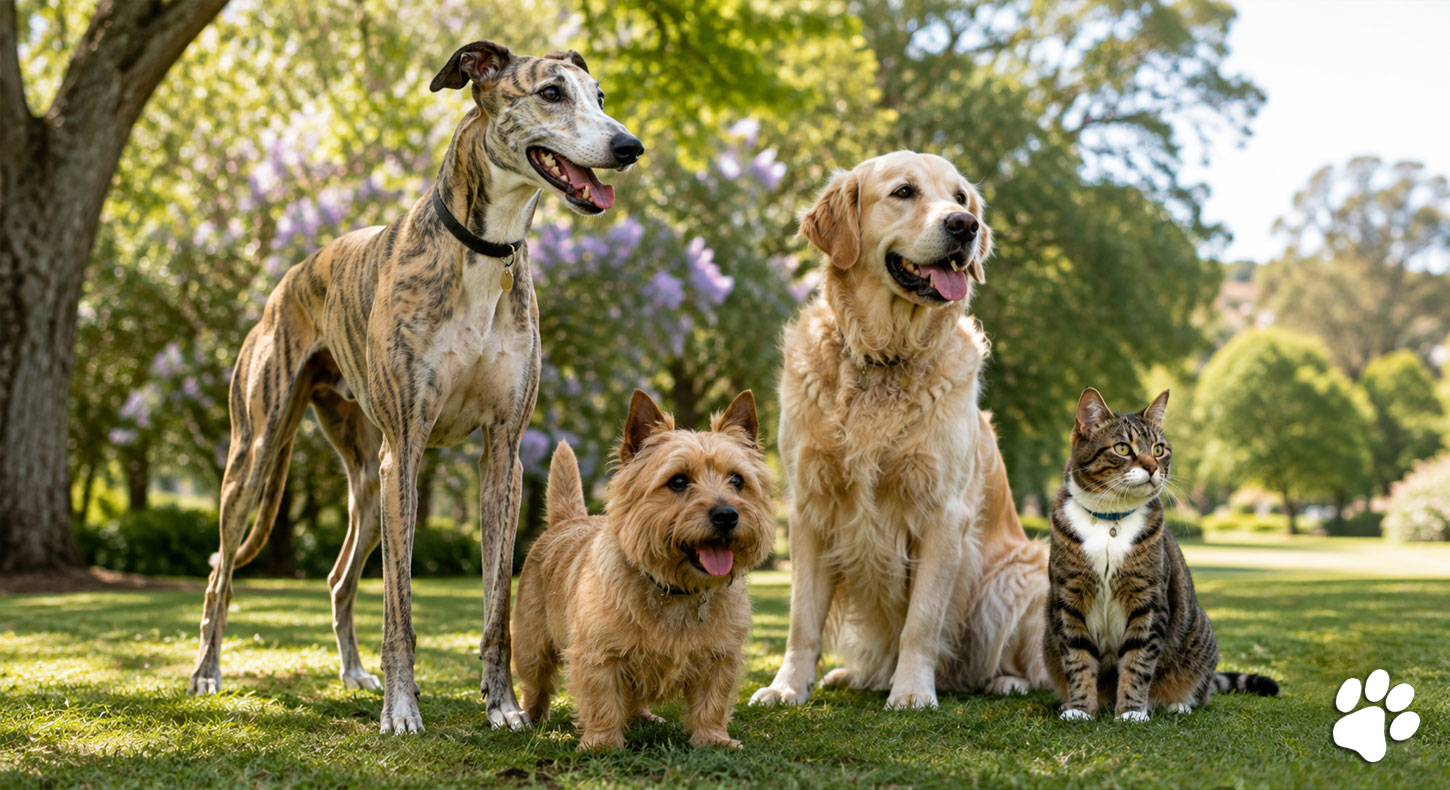
A Greyhound and a Labrador shouldn’t have the same silhouette. Two dogs of the same breed may have different healthy weights. A senior cat’s nutritional needs may be quite different from those they had at five years old.
That’s why good weight management begins with the individual.
If you’re unsure whether your dog or cat is underweight, overweight or just right, contact the team at Normanhurst Vet Practice on 02 9489 6000. We can assess their body and muscle condition, discuss their diet and lifestyle, and help you understand what a healthy weight looks like for your pet.