

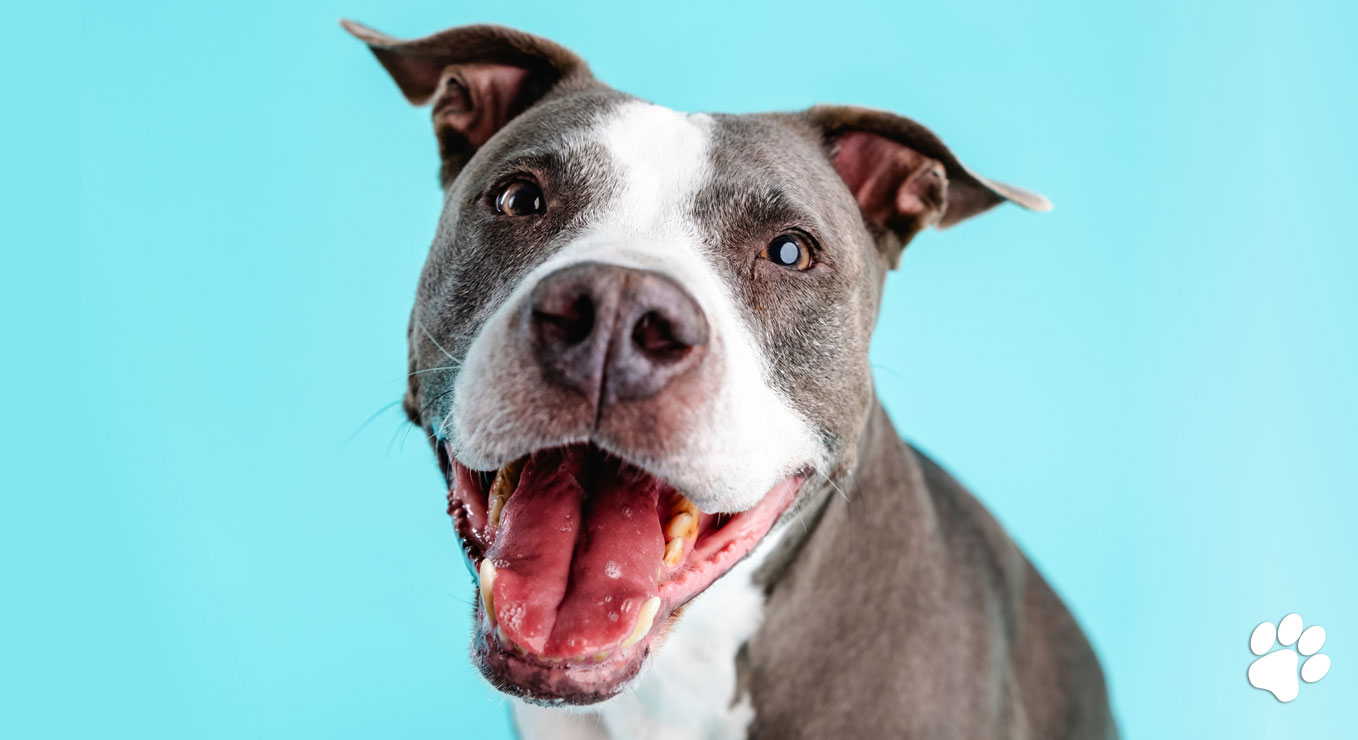
Dog Bad Breath: When Should You Be Concerned?
We’ve all experienced it.
Your dog jumps up for a cuddle, rests their head on your lap, or proudly drops a slobbery tennis ball at your feet. Then they yawn… and you’re suddenly hit with a breath that could clear the room.
Many owners laugh it off. After all, dogs sniff everything from muddy puddles to yesterday’s possum trail. Surely bad breath just comes with owning a dog?
Not necessarily.
While it’s easy to dismiss dog bad breath as normal, persistent unpleasant breath is often your dog’s way of telling you something isn’t quite right. In many cases, it can be the earliest sign of dental disease, infection, or even an underlying medical condition that deserves attention.
The important thing to remember is this: bad breath isn’t the problem. It’s a symptom.
At Normanhurst Vet Practice, we often see dogs whose owners have become accustomed to gradually worsening breath over months or even years. Because the change happens slowly, it can be surprisingly difficult to notice just how severe it has become until other symptoms appear.
The good news is that recognising the signs early can help protect your dog’s comfort, health and quality of life.
Is bad breath normal in dogs?
Dogs don’t naturally have minty fresh breath, but healthy dogs shouldn’t have breath that is overpowering, offensive or foul.
A slight “doggy” smell after eating, playing outside or chewing a favourite toy is perfectly normal. Persistent bad breath, however, usually points to an underlying cause.
The most common culprit is dental disease.
In fact, studies suggest that around 80% of dogs show evidence of periodontal disease by the age of three. Many owners are surprised by this statistic because the disease often develops silently, long before obvious symptoms appear.
Unlike people, dogs don’t complain about sore teeth or swollen gums. They continue eating, playing and wagging their tails while quietly adapting to increasing discomfort.
That means their breath may become one of the earliest warning signs you notice.
What causes dog bad breath?
Several conditions can contribute to bad breath in dogs, ranging from relatively minor issues to problems requiring prompt veterinary attention.
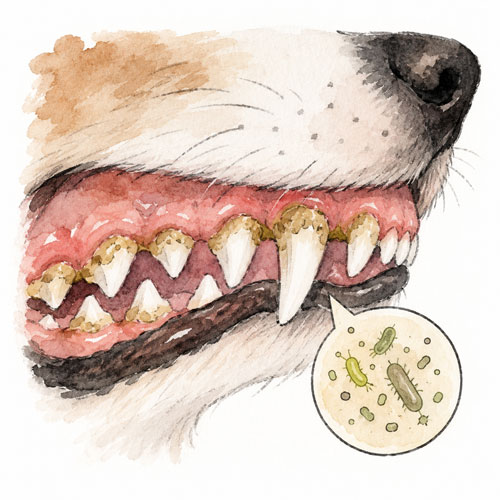
Dental plaque and tartar
Every day, bacteria naturally accumulate on your dog’s teeth. If this soft plaque isn’t removed through chewing, brushing or professional dental care, it hardens into tartar. The rough surface then traps even more bacteria, creating an ideal environment for infection. As bacteria multiply beneath the gumline, they produce sulphur compounds that create the unpleasant smell many owners recognise. Without treatment, this process progresses to periodontal disease.
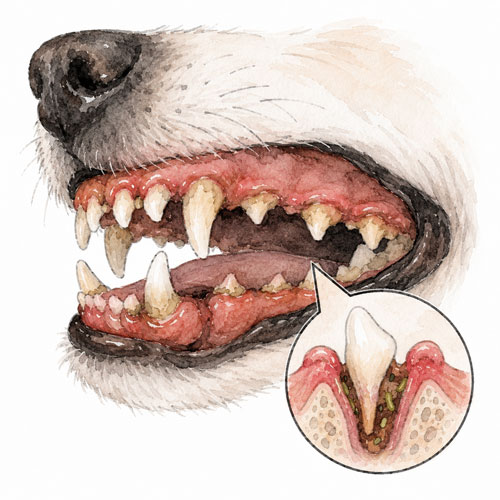
Gum Disease
Inflamed gums are often painful, even though dogs rarely show obvious signs. As the infection advances, gums begin to separate from the teeth, creating pockets where bacteria flourish. These infections damage the tissues supporting the teeth and can eventually lead to loose teeth, abscesses and tooth loss. This stage often produces a particularly strong odour.
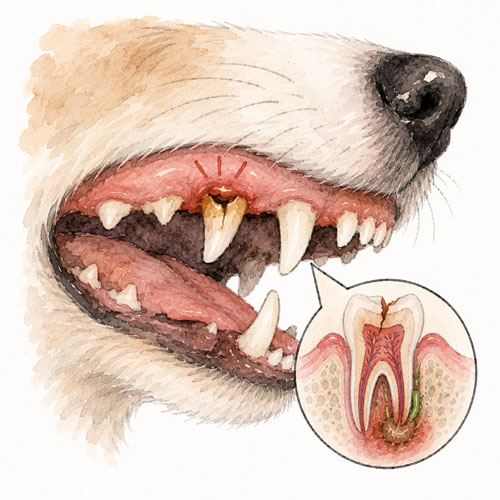
Damaged or infected teeth
Broken teeth are surprisingly common, especially in enthusiastic chewers. Cracked teeth can expose the sensitive pulp inside the tooth, allowing bacteria to enter and cause painful infections. Unfortunately, many dogs continue eating despite significant discomfort. A damaged tooth may only become obvious when persistent bad breath develops.
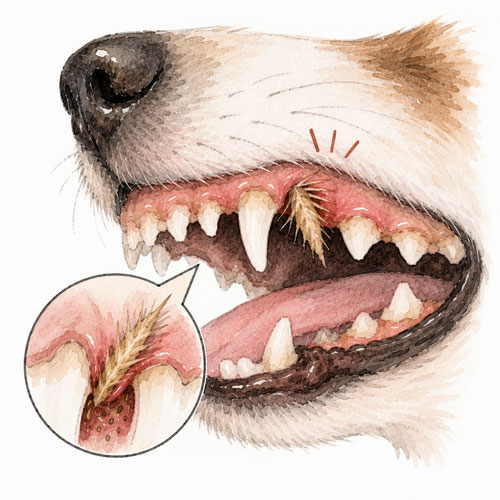
Something stuck in the mouth
Occasionally, the cause is much simpler. Grass seeds, sticks, bones, pieces of rope toy or other foreign material can become lodged between teeth or under the gums. These objects trap bacteria and food debris, quickly leading to inflammation and unpleasant breath.
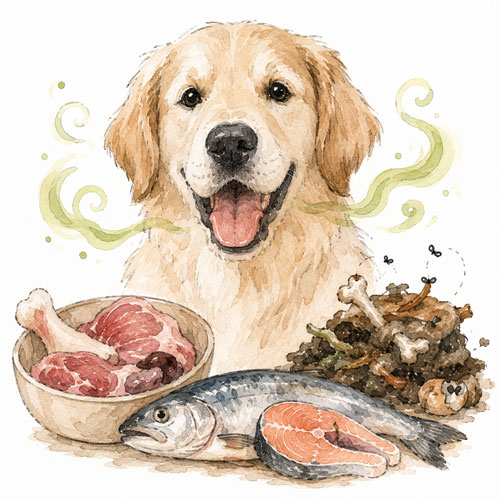
Diet
Certain foods naturally create temporary odours. Dogs that regularly eat raw diets, fish-based foods or scavenged material may have stronger breath after meals. While this usually settles, persistent odour that continues regardless of diet should still be investigated
Medical conditions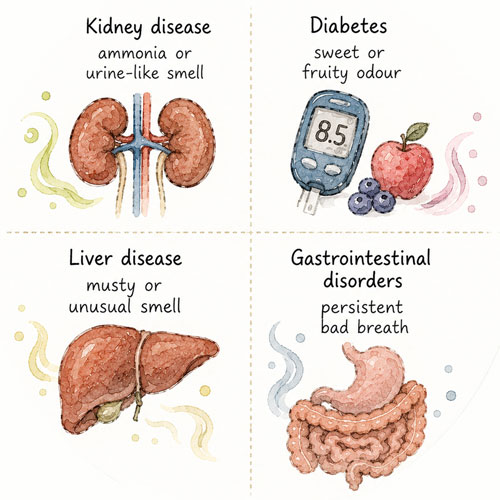
Although dental disease remains the most common cause, bad breath can sometimes indicate problems elsewhere in the body.
For example:
- Kidney disease may produce breath with an ammonia or urine-like smell.
- Diabetes can occasionally cause a sweet or fruity odour.
- Liver disease may create an unusual, musty smell.
- Gastrointestinal disorders can sometimes contribute to persistent bad breath.
These conditions are far less common than dental disease, but they highlight why ongoing bad breath should never simply be ignored.
Dogs are remarkably good at hiding pain
One of the biggest misconceptions in veterinary medicine is that if a dog is still eating, they can’t have sore teeth.
In reality, dogs are incredibly resilient.
Their survival instincts encourage them to mask pain wherever possible. In the wild, showing weakness can make an animal vulnerable. Although our dogs now live comfortable family lives, those instincts remain deeply ingrained.
Many dogs continue eating with advanced dental disease by simply chewing differently, favouring one side of the mouth or swallowing larger pieces of food.
Others gradually stop playing tug games, become reluctant to chew toys, or seem less enthusiastic about meals without owners realising why.
By the time obvious symptoms appear, significant disease may already be present.
Signs that bad breath could indicate something more serious
Bad breath is rarely the only clue.
Keep an eye out for other changes, including:
Any combination of these signs deserves a veterinary examination.
IF DOGS COULD TALK…
“My breath changed because my mouth hurts. I just don’t know how to tell you.”

Why dental disease affects more than just the mouth
It’s easy to think of dental disease as a problem that’s limited to teeth and gums.
In reality, chronic infection inside the mouth can have much wider effects.
The mouth contains millions of bacteria. When gums become inflamed and infected, these bacteria can enter the bloodstream, particularly during chewing or while inflamed tissues bleed.
Research suggests that long-term periodontal disease may contribute to inflammation affecting organs such as the heart, kidneys and liver. While not every dog develops these complications, maintaining good oral health is considered an important part of supporting overall wellbeing.
Perhaps just as importantly, chronic dental pain affects your dog’s quality of life.
Dogs that once loved carrying sticks, chasing balls or chewing enrichment toys may quietly stop enjoying these activities because they’re uncomfortable.
Owners often notice their dog:
- Seems years younger.
- Is playing with toys again.
- How much happier they become.
That’s because dogs rarely show us how much discomfort they’ve been living with until it’s finally gone.
How your vet diagnoses the cause of bad breath
The first step is always a thorough physical examination.
We’ll examine your dog’s mouth, gums and teeth, looking for obvious signs of plaque, tartar, fractured teeth, infection or inflammation. We’ll also discuss any changes you’ve noticed at home, including eating habits, chewing behaviour or other symptoms.
Sometimes the problem is visible immediately.
However, much of periodontal disease develops beneath the gumline where it cannot be seen while your dog is awake.
For this reason, a complete dental assessment is usually performed under a carefully monitored general anaesthetic.
This allows us to:
- Examine every tooth properly.
- Measure periodontal pockets.
- Assess gum health.
- Take full-mouth dental X-rays where indicated.
- Identify disease hidden below the gumline.
Dental radiographs are particularly valuable because they allow us to evaluate the roots of the teeth and surrounding bone. Many painful conditions are invisible during a simple visual examination.
The result is a much clearer understanding of exactly what’s causing your dog’s bad breath and the most appropriate treatment plan.
What treatments are available for dog bad breath?
Treatment always depends on the underlying cause. While there are countless products on the market claiming to freshen your dog’s breath, it’s important to remember that they don’t treat the source of the problem.
If bad breath is caused by periodontal disease, simply masking the odour allows the disease to continue progressing.
Your dog’s treatment plan may include:
Professional dental cleaning
A professional treatment, under general anaesthetic, removes plaque and tartar from both above and below the gumline, where disease often develops unnoticed. This allows every tooth to be thoroughly assessed and cleaned while keeping your dog safe and comfortable.
Dental X-rays
Many dental problems cannot be seen by looking at the visible part of the tooth.
Dental radiographs help identify hidden infections, fractured tooth roots, bone loss and other conditions that would otherwise remain untreated.
Tooth extraction
You may be worried about the thought of removing a tooth, but extraction is often the kindest option when a tooth is badly infected or beyond repair.
Removing a chronically painful tooth often provides immediate relief and significantly improves a dog’s comfort.
Medical treatment
If your dog’s bad breath is linked to another health condition, treatment will focus on managing the underlying disease.
This may involve blood tests, urine testing or additional diagnostic imaging to determine the cause.
Can dog bad breath be prevented?
In many cases, yes.
Good oral care throughout your dog’s life dramatically reduces the risk of painful dental disease.
Some simple habits make a significant difference.
Brush your dog’s teeth
Daily brushing remains the gold standard.
Using a dog-specific toothbrush and veterinary toothpaste removes plaque before it hardens into tartar. Human toothpaste should never be used, as it contains ingredients that can be harmful if swallowed.
If your dog has never had their teeth brushed before, introduce brushing gradually using plenty of praise and positive reinforcement.
Choose appropriate dental products
Not every dental chew works as advertised.
Products approved by the Veterinary Oral Health Council (VOHC) have been independently assessed for their effectiveness in reducing plaque or tartar.
Your veterinarian can recommend products suitable for your dog’s size, age and chewing habits.
Schedule regular dental checks
Many dental problems develop beneath the gumline before they become visible.
Routine veterinary examinations allow subtle changes to be detected early, often preventing more complex treatment later.
Feed an appropriate diet
Some specially formulated dental diets are designed to help reduce plaque accumulation.
Your veterinarian can advise whether these are suitable for your dog’s individual needs.
IF DOGS COULD TALK…
“I still wag my tail because I’m happy to see you. That doesn’t mean my teeth don’t hurt.”
Dogs don’t separate happiness from pain the way people often expect.
A dog with severe dental disease will still greet you at the door, ask for a walk and curl up beside you on the couch.
Their loyalty doesn’t disappear because they’re uncomfortable.
That’s why regular health checks are so important. They allow us to find the problems your dog is quietly living with before they become much more serious.
Home remedies: what’s safe and what isn’t?
The internet is full of suggestions for treating dog bad breath naturally.
Some are harmless. Others can delay treatment or even put your dog’s health at risk.
Be cautious about advice recommending essential oils, bicarbonate of soda, activated charcoal or homemade mouth rinses. Many products promoted for people are not suitable for dogs.
Likewise, simply adding water additives or offering extra dental chews should never replace a veterinary examination if your dog’s breath has changed significantly.
If you’re ever unsure, ask us first.
We’re always happy to discuss safe options for supporting your dog’s oral health.
When should you book a veterinary appointment?
Arrange a check-up if your dog’s bad breath:
Even if your dog appears otherwise healthy, persistent bad breath deserves investigation.
Early treatment is usually simpler, less invasive and more comfortable than waiting until disease becomes advanced.
IF DOGS COULD TALK…
“I’ve had sore teeth for a long time. You’re noticing now because I’m showing you signs.”
Dogs rarely complain.
They simply adjust to discomfort one small step at a time.
That’s why owners should never feel guilty for missing the early signs. Dental disease often develops gradually, and many of the changes are subtle.
The important thing isn’t when you noticed.
It’s what you do next.
IF DOGS COULD TALK…
“Thank you for listening when I couldn’t tell you myself.”

Every veterinary visit starts with listening.
Not just to your dog, but to you.
When owners notice small changes like bad breath, eating differently or losing interest in favourite toys, those observations help us build a clearer picture of what’s happening.
Sometimes the answer is reassuringly simple.
Sometimes we uncover a problem before it causes significant pain.
Either way, paying attention to those small changes is one of the best gifts you can give your dog.
Looking after the whole dog, not just their teeth
At Normanhurst Vet Practice, we believe good veterinary care goes far beyond treating symptoms.
When a dog develops bad breath, we’re not simply looking for a way to make their mouth smell fresher.
We’re asking why it changed.
We’re looking for pain they may be hiding, infection that hasn’t yet become obvious, or health conditions that deserve early attention.
Whether your dog needs a routine dental clean, treatment for periodontal disease or further investigation into an underlying medical condition, our goal is always the same: helping them live a happier, healthier and more comfortable life.
Because if dogs could tell us when something hurts, they would.
Until then, we’re here to help listen on their behalf.
FAQs
Is dog bad breath always caused by dental disease?
No. Dental disease is the most common cause, but bad breath can also result from foreign objects lodged in the mouth, damaged teeth, kidney disease, diabetes, liver disease and some gastrointestinal conditions. A veterinary examination can identify the underlying cause.
How often should my dog’s teeth be professionally cleaned?
Every dog is different. Some require professional dental cleaning every year, while others may need it more or less frequently depending on breed, age, genetics and home dental care. Your veterinarian can recommend an appropriate schedule.
Can I use human toothpaste on my dog?
No. Human toothpaste contains ingredients such as fluoride and xylitol that can be harmful if swallowed by dogs. Always use toothpaste formulated specifically for dogs.
Are dental chews enough to keep my dog’s teeth healthy?
Dental chews can help reduce plaque when used appropriately, but they don’t replace tooth brushing or regular veterinary dental examinations. They work best as part of a complete dental care routine.
When should I worry about my dog’s bad breath?
If bad breath persists, suddenly worsens, or is accompanied by bleeding gums, difficulty eating, facial swelling, excessive drooling or changes in behaviour, your dog should be examined by a veterinarian as soon as possible.